


Nature’s Tiny Chemists
Dr. Oberlies’ lab is searching for cancer-fighting compounds in fungi, advancing research on medicinal herbs, and exploring how fungal chemistry could make electricity cheaper and safer.
Dr. Oberlies’ lab is searching for cancer-fighting compounds in fungi, advancing research on medicinal herbs, and exploring how fungal chemistry could make electricity cheaper and safer.
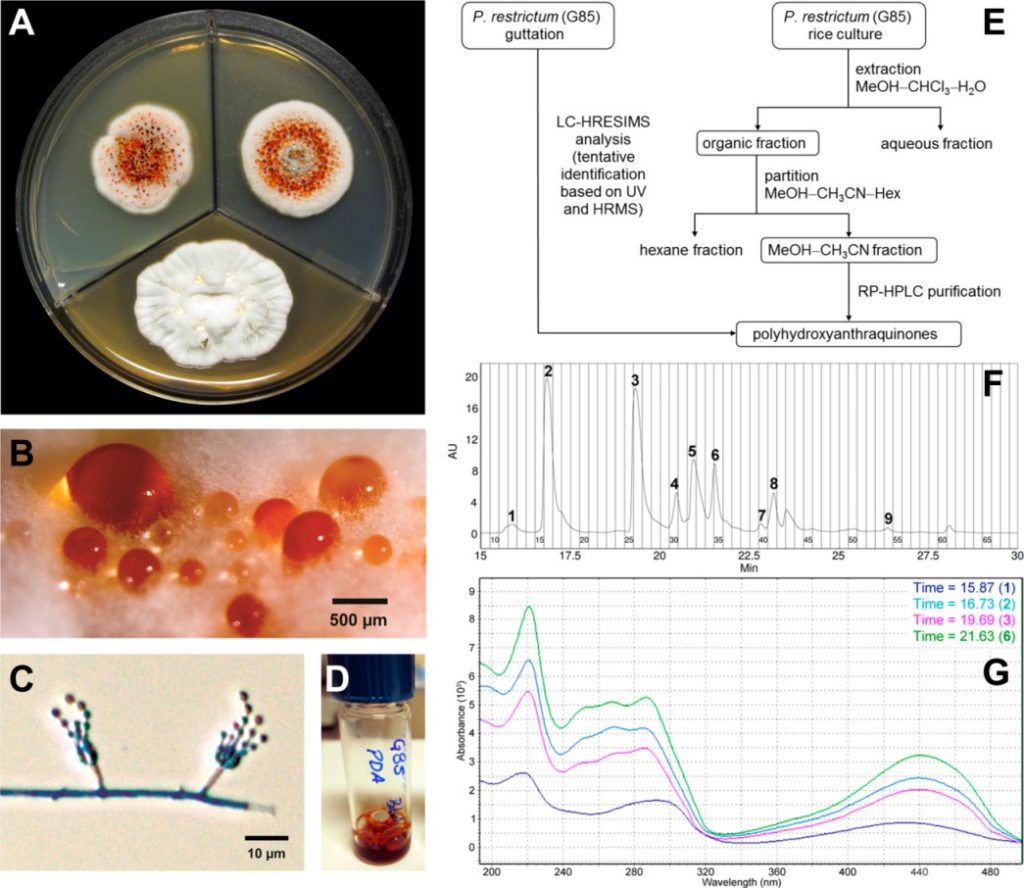
Several drug leads isolated from our fungal library and that at Mycosynthetix are showing promising activity in vivo. One of these is a compound that was isolated from the beautiful red droplets produced by an endophytic fungus, Penicillium restrictum. As described in a recent high profile article in Antimicrobial Agents… Continue reading…

Nanoparticle (NP)-based drug-delivery systems are frequently employed to improve the intravenous administration of chemotherapy; however, few reports explore their application as an intraperitoneal therapy. We developed a pH-responsive expansile nanoparticle (eNP) specifically designed to leverage the intraperitoneal route of administration to treat intraperitoneal malignancies, such as mesothelioma, ovarian, and pancreatic… Continue reading…

Photodynamic therapy (PDT) is a strategy for treating cancer, where a nontoxic prodrug, the photosensitizer (PS), is activated by light to form reactive species that destroy tumor tissue. The advantage of PDT over traditional chemotherapy is that drug toxicity can be localized to the target region through precise spatial and… Continue reading…