

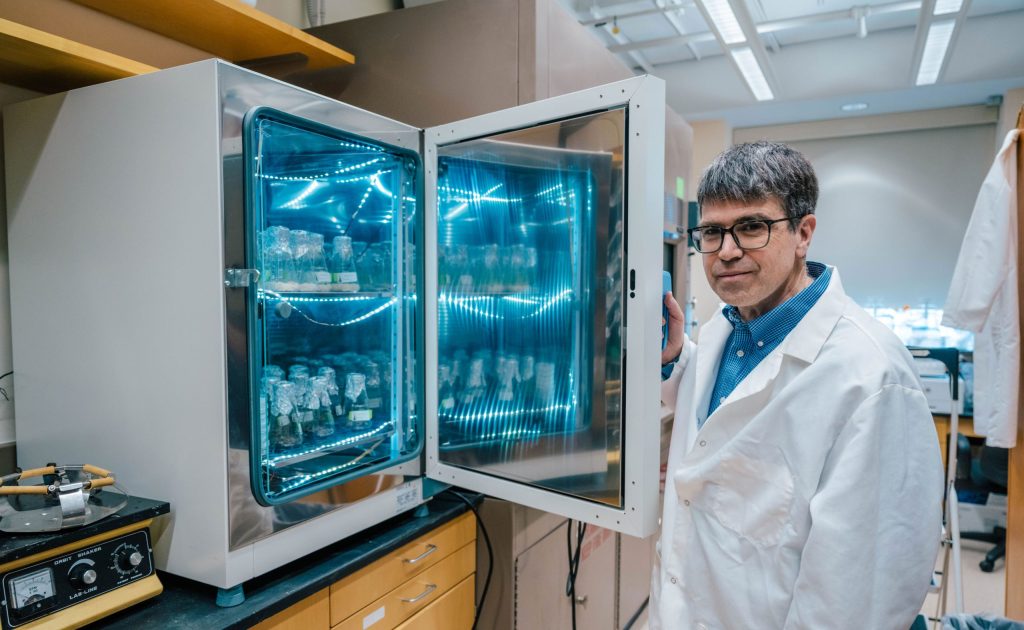
Growing buildings in space: UNCG, Luna Labs test fungi as construction material for moon, Mars
With funding from NASA, Dr. Oberlies’ lab and Luna Labs are exploring the use of fungus as a building material in space.
With funding from NASA, Dr. Oberlies’ lab and Luna Labs are exploring the use of fungus as a building material in space.

Dr. Oberlies’ lab is searching for cancer-fighting compounds in fungi, advancing research on medicinal herbs, and exploring how fungal chemistry could make electricity cheaper and safer.

Dr. Liam Duffy has received a new R&D grant from NCInnovation, a public-private partnership designed to accelerate and commercialize innovative research emerging from North Carolina’s universities.
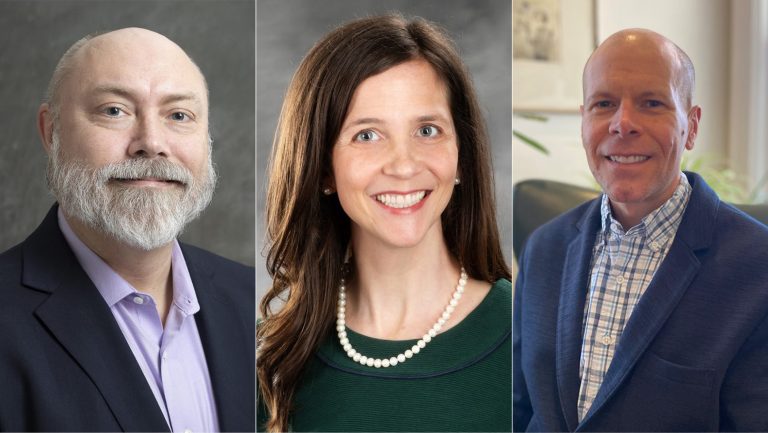
Spencer Russell and Kimberly Petersen win 2025 Alumni Teaching Excellence Award and Board of Governors Excellence in Teaching Award (respectively).
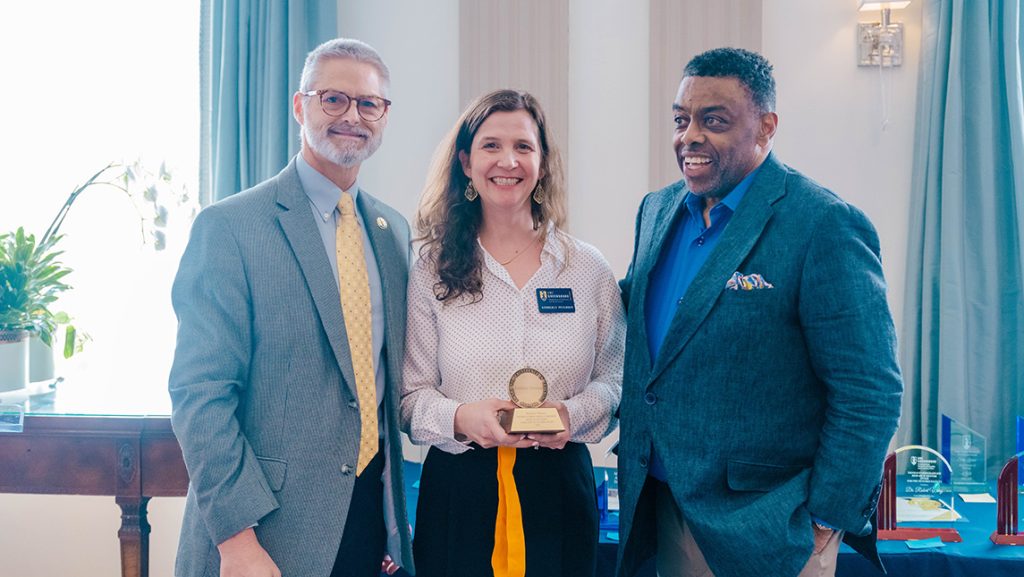
Thanks to her commitment, students carry incredible success stories out of the Sullivan Science Building. Many of her undergraduates and graduate students have capitalized on prestigious funding opportunities and highly competitive scholarship or fellowships. She says, “Of the undergraduate student alums from my research group, at least 10 have pursued graduate degrees in chemistry or related fields, at least seven attended medical or professional schools, and at least 10 are working in science industries.”

PI Maia Popova, her graduate student, Roshni G. Bhaskar, and co-PI David von Dohlen won internal funding to develop an intervention to support organic chemistry student representational competence and reasoning with multiple representations. While much research has been done on representational competence, there remains a pressing need for practical tools… Continue reading…
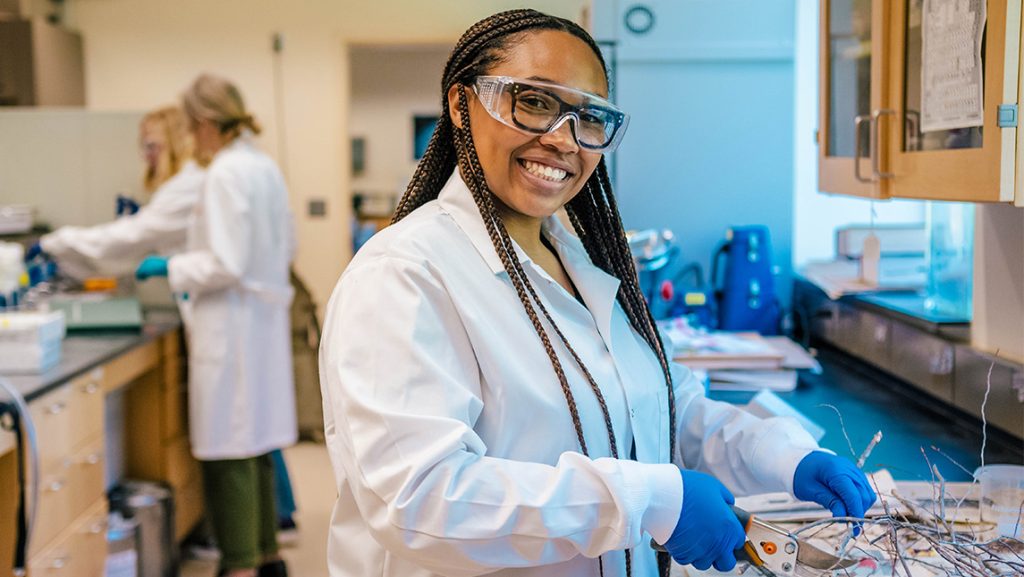
Janae Wofford always liked getting to the “root” of an issue. That’s not surprising for someone who grew up in the scenic Blue Ridge Mountains encircling Asheville, North Carolina.
When she chose to study at UNC Greensboro, she was pleased to keep in touch with nature through greenspaces like Guilford Woods. “I love hiking,” the Honors College student says. “It was nice to see a woody area that I could hike with little creeks to jump across, the type of stuff I’m used to back home.”
One walk in the woods inspired research that landed her a Goldwater Scholarship, one of the most coveted STEM scholarships in the nation. She hopes that her work will contribute to new medicines to treat infections that are growing more dangerous with time.
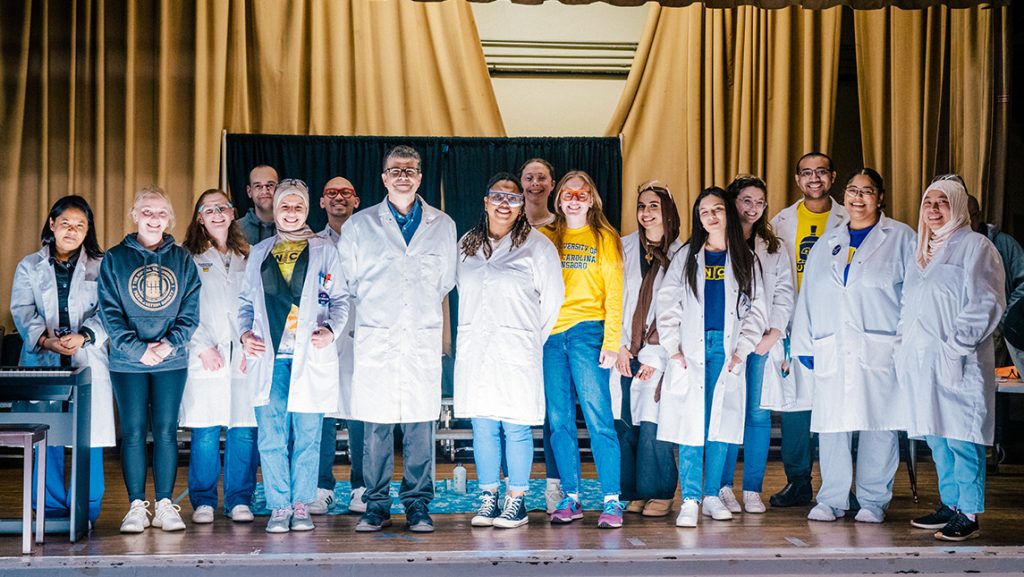
Dr. Nick Oberlies and his team get elementary school students excited about science at Family Science Night!
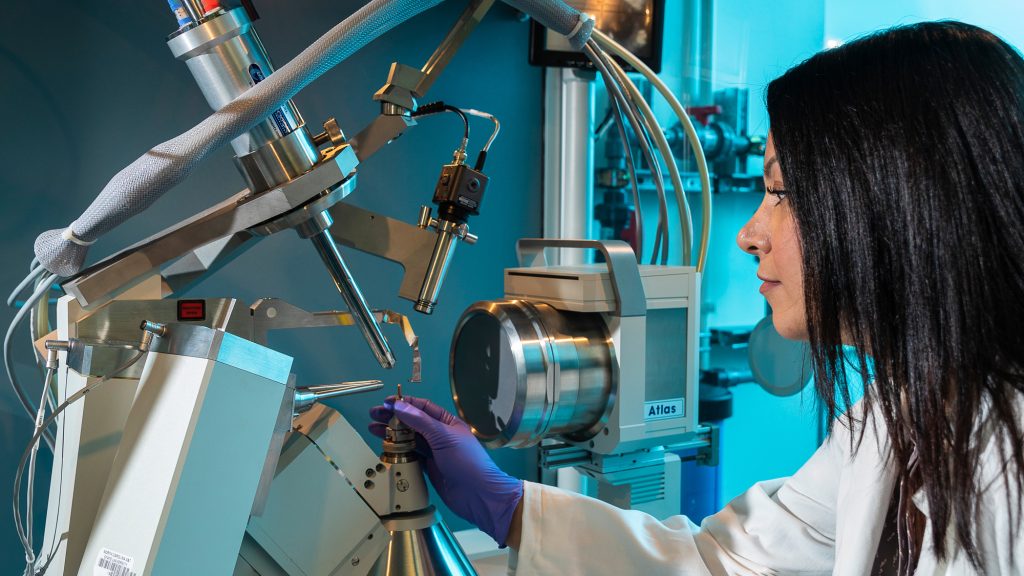
With a $1.5 million state grant, UNCG faculty are leading a unique research effort to explore how complex molecules found in living organisms, such as fungi, could be used to engineer more environmentally friendly energy systems.
“People have been looking at natural products for centuries for medicinal applications,” said Dr. Shabnam Hematian, Bernard-Glickman Dean’s Professor in the Department of Chemistry and Biochemistry. “We believe that can be done for energy, too.”
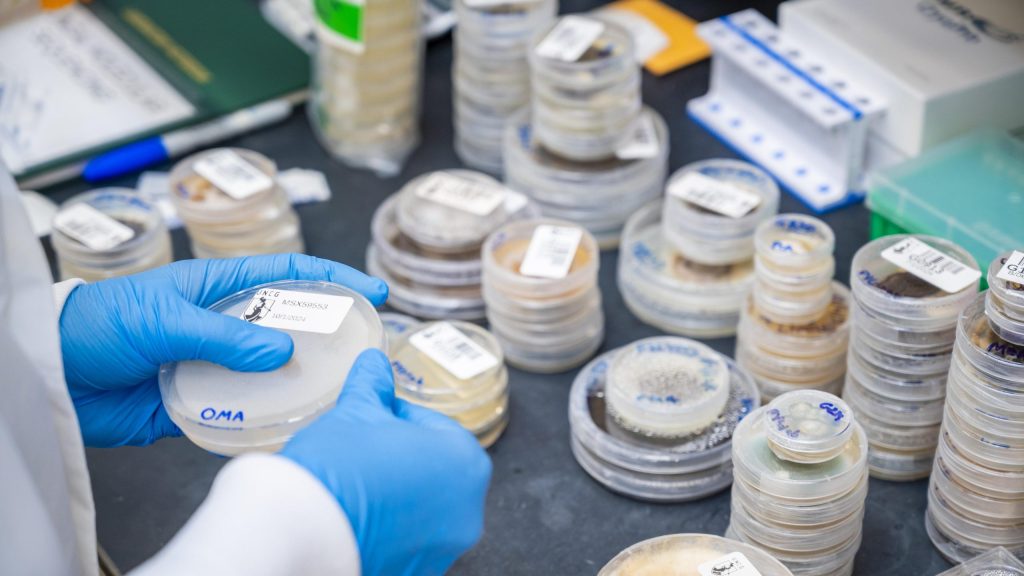
Dr. Nicholas Oberlies, Patricia A. Sullivan Distinguished Professor of Chemistry and Director of Graduate Studies in UNCG’s Department of Chemistry and Biochemistry, has received a new $50,000 grant from Chemia Biosciences, Inc., as part of the company’s larger NIH SBIR (Small Business Innovation Research) grant, “Developing novel natural products from fungal species.” The project is using machine learning coupled with genomic and LC-MS/MS data to identify promising fungal metabolites that derive from NRPS biosynthetic pathways. The goal for the UNCG team is to support efforts to isolate and identify those compounds from specific fungal cultures.