

Growing buildings in space: UNCG, Luna Labs test fungi as construction material for moon, Mars
With funding from NASA, Dr. Oberlies’ lab and Luna Labs are exploring the use of fungus as a building material in space.
With funding from NASA, Dr. Oberlies’ lab and Luna Labs are exploring the use of fungus as a building material in space.
2024 Senior Research Excellence Awardee Oberlies discusses big ideas behind natural products chem, the teamwork driving drug discovery, and mentorship.

Dr. Oberlies’ lab is searching for cancer-fighting compounds in fungi, advancing research on medicinal herbs, and exploring how fungal chemistry could make electricity cheaper and safer.
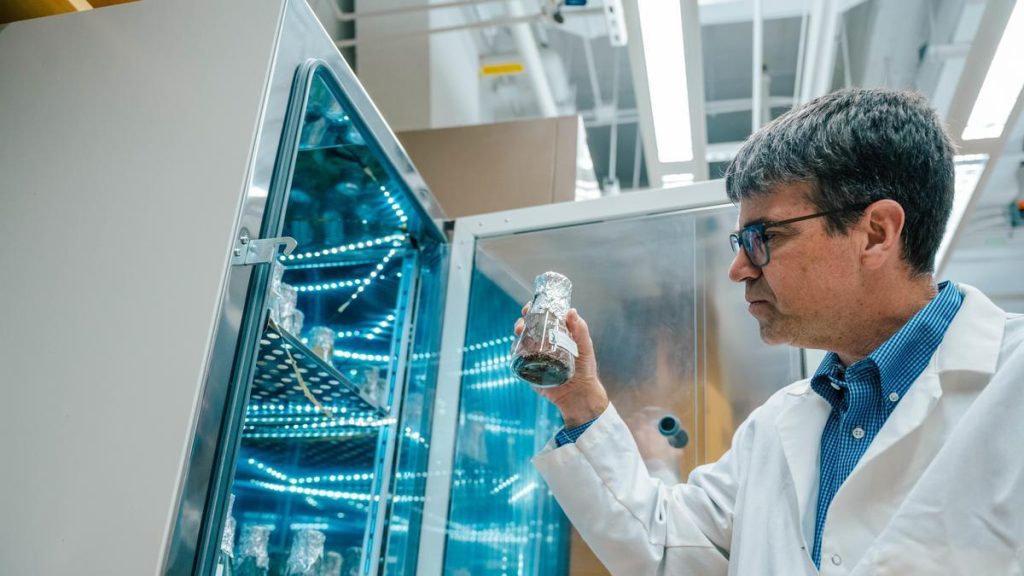
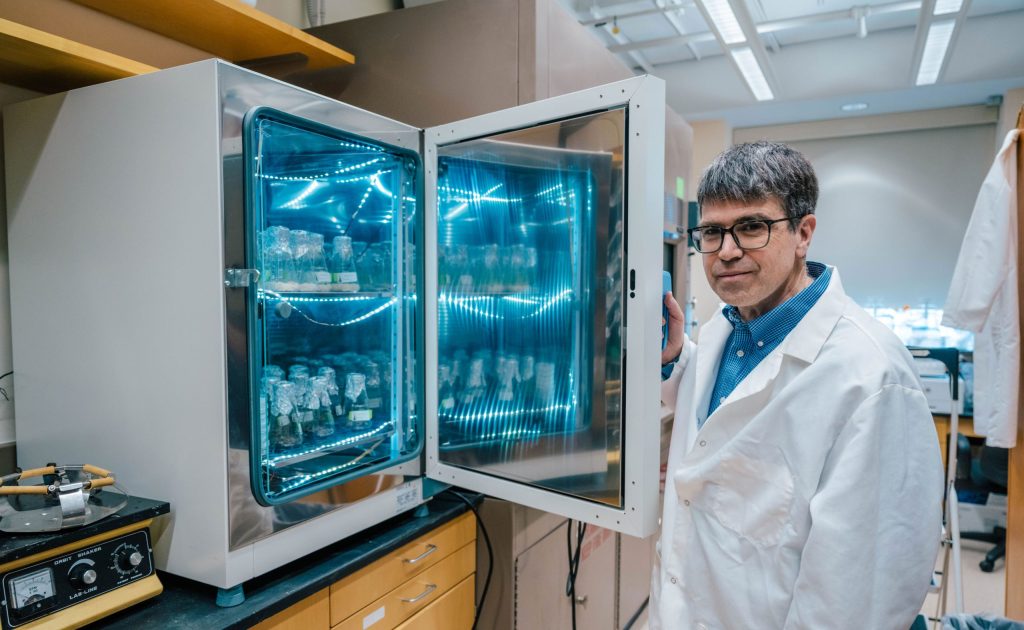
Dr. Nicholas Oberlies has received a new grant from Luna Labs as part of a new NASA STTR (Small Business Technology Transfer) grant. The project — “Extraterrestrial Fungal Brickworks” — will seek to “develop and optimize mycelia-based building materials for lunar and Martian habitats.” The Oberlies Lab will contribute expertise in mycological analysis.
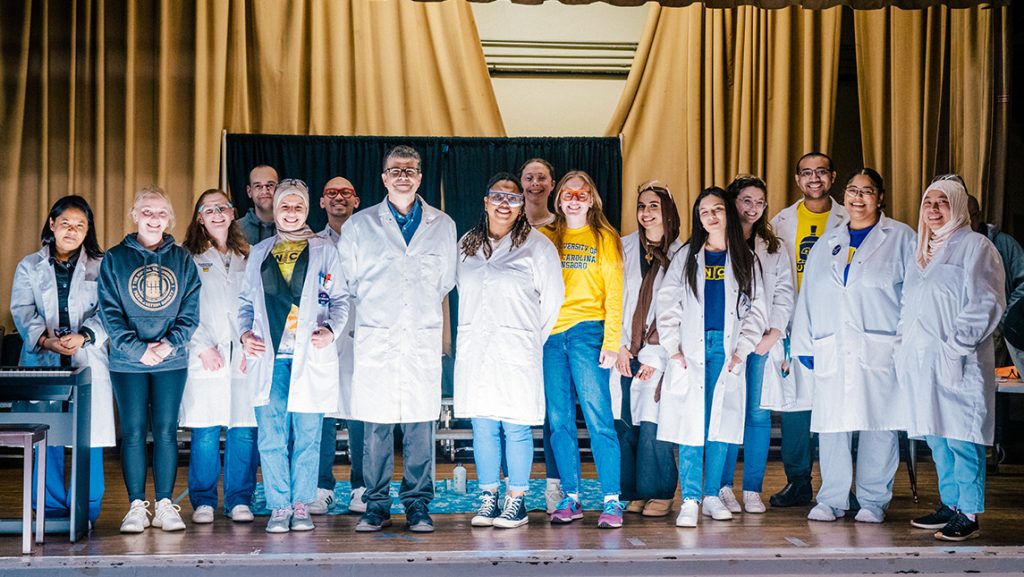
Dr. Nick Oberlies and his team get elementary school students excited about science at Family Science Night!
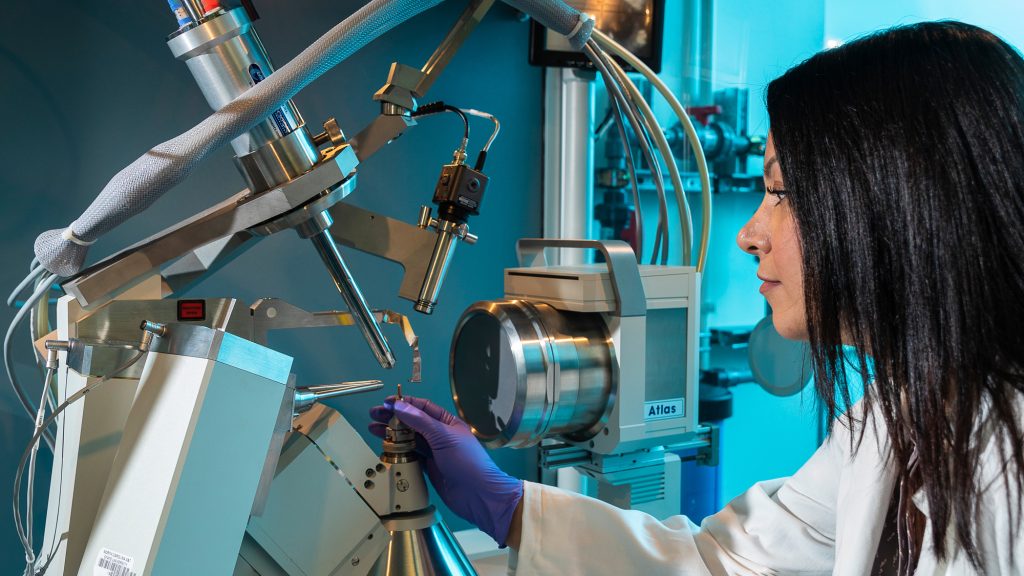
With a $1.5 million state grant, UNCG faculty are leading a unique research effort to explore how complex molecules found in living organisms, such as fungi, could be used to engineer more environmentally friendly energy systems.
“People have been looking at natural products for centuries for medicinal applications,” said Dr. Shabnam Hematian, Bernard-Glickman Dean’s Professor in the Department of Chemistry and Biochemistry. “We believe that can be done for energy, too.”
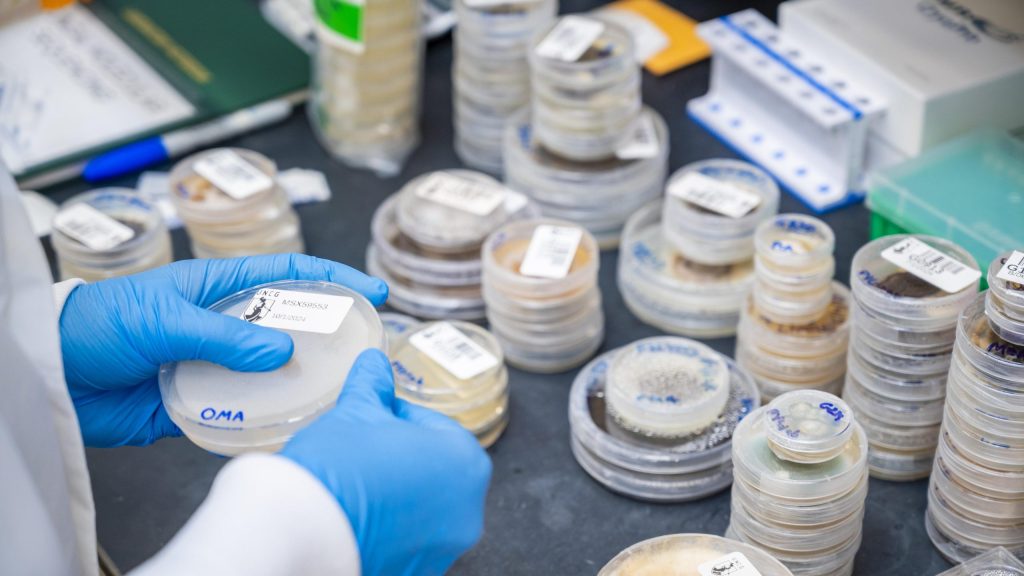
Dr. Nicholas Oberlies, Patricia A. Sullivan Distinguished Professor of Chemistry and Director of Graduate Studies in UNCG’s Department of Chemistry and Biochemistry, has received a new $50,000 grant from Chemia Biosciences, Inc., as part of the company’s larger NIH SBIR (Small Business Innovation Research) grant, “Developing novel natural products from fungal species.” The project is using machine learning coupled with genomic and LC-MS/MS data to identify promising fungal metabolites that derive from NRPS biosynthetic pathways. The goal for the UNCG team is to support efforts to isolate and identify those compounds from specific fungal cultures.
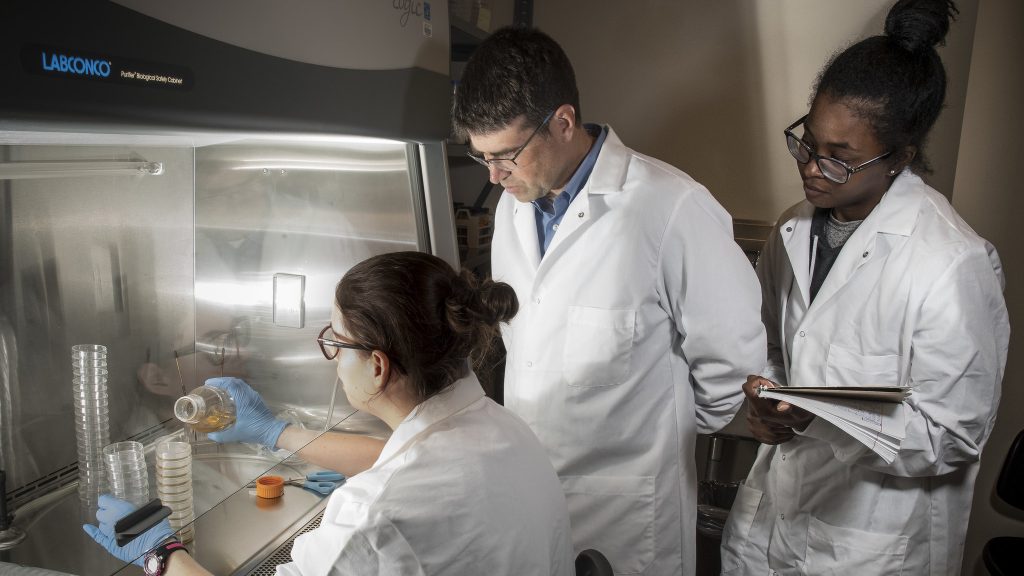
Oberlies is renowned for his work in drug discovery from filamentous fungi – a line of research that could result in improved treatments for a variety of diseases, including cancer and malaria. He also investigates herbal drugs, such as milk thistle and kratom, to develop reference standards and determine chemical composition and safety.
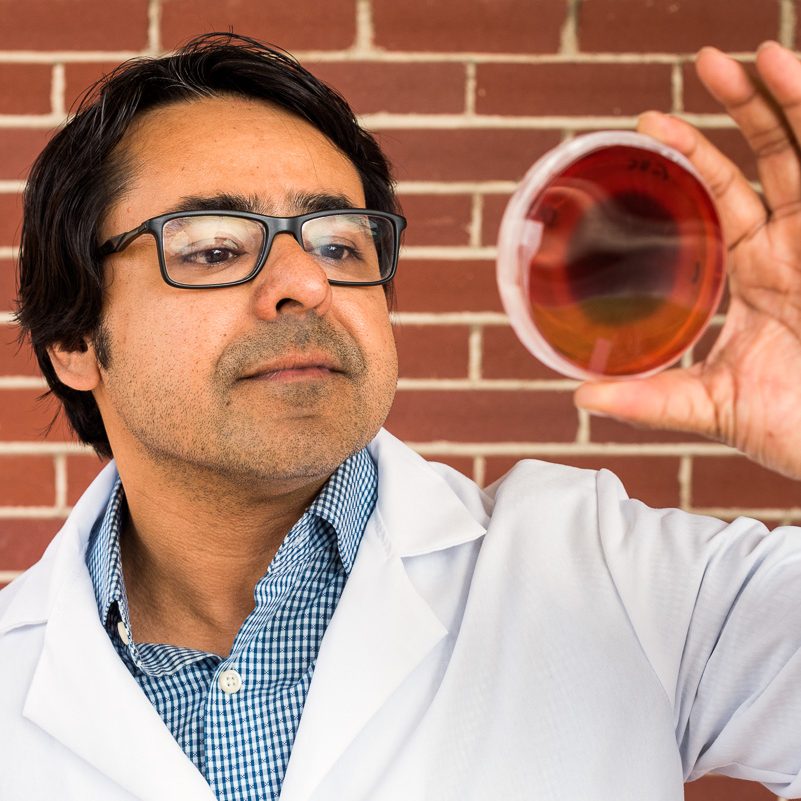
Dr. Huzefa Raja, a Research Scientist in the Oberlies Research Group in the Department of Chemistry and Biochemistry, has a received a one-year, $15,000 grant from the Indianapolis Zoo to study freshwater ascomycete fungi from submerged wood in aquatic habitats of Marion County, Indiana.
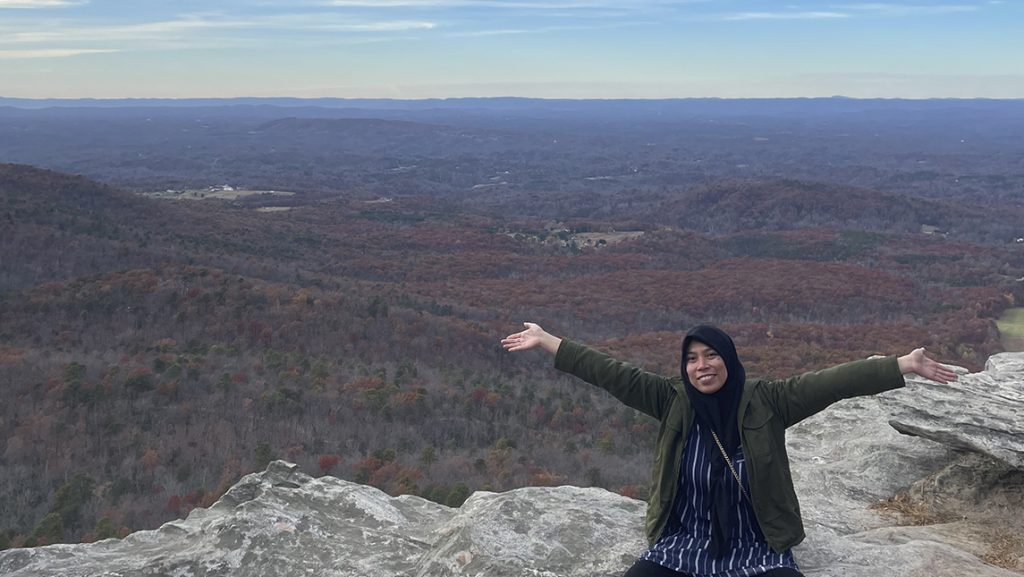
Fulbright doctoral student Baiq Desy Ratnasari hopes to apply the principles and techniques she’s learned at UNCG to find compounds that prevent or treat malaria.