Jones, T., Ahmed, R., Cieza, E., Pratt, J. M.*, Popova, M.*, Resources and support for marginalized women in chemistry doctoral programs: What they had and what they needed. J. Chem. Educ., DOI: 10.1021/acs.jchemed.5c00274.
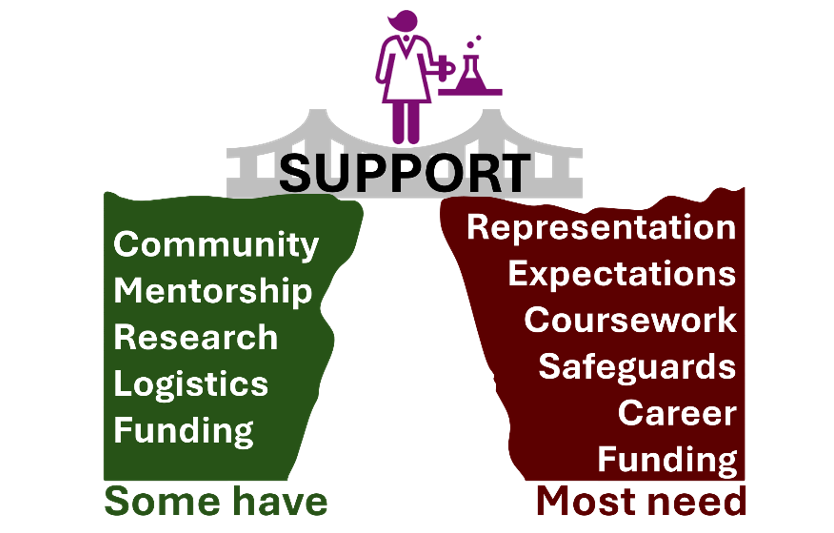
Marginalized women now enter chemistry doctoral programs and earn more Ph.D. degrees than ever. As such, there is a growing emphasis on exploring their experiences during their degree pursuits and identifying ways to support them. While steps have been taken to promote diversity in chemistry, underprivileged women continue to encounter hurdles. To better understand their experiences, we interviewed 29 marginalized American and international women (including Black, Hispanic/Latina, Asian, Pacific Islander, and Indigenous) from 20 research-intensive institutions in the U.S. to gather firsthand accounts of their time in their programs. This paper focuses on the resources and support those women desired and received while in chemistry graduate programs. Some women reported receiving (a) supportive mentorship, (b) access to various resources to conduct research, (c) financial support to continue in their program, (d) administrative staff support on navigating graduate school logistics, and (e) community and fellowship with individuals who share their identities within the department. Despite receiving adequate support in some areas, most women desired additional support; they wanted (a) more emotional support and understanding from their advisors, including guided mentorship for careers outside of academia and research, (b) clear expectations to demystify graduate school, (c) increased funding opportunities, (d) safe spaces and safeguards against inappropriate behavior from advisors, peers, and faculty, (e) assistance with classes and transitioning into graduate programs, and (f) representation in the form of role models who share their identities that can enhance their sense of belonging. We also captured some distinct experiences among marginalized women depending on their intersecting identities. American women emphasized the importance of supportive communities, clear institutional policies, and protection from inappropriate behavior. International women highlighted challenges tied to funding restrictions and navigating unfamiliar academic systems, often relying on administrative staff for guidance. First-generation college students stressed the critical role of mentorship, with those lacking strong mentors facing hurdles in research and career planning. Married women and mothers identified financial stability as essential, with funding playing a key role in balancing academic and family responsibilities. Based on these findings, we have curated a list of suggestions for departments and faculty members to increase the level of support provided to chemistry graduate students and sustain the support already in place.