
We are recruiting graduate students for the 2027 cycle!

We are seeking highly motivated students to join the lab in Fall 2027. Students are welcome to contact Dr. Daniel Nascimento to discuss research opportunities before applying to the UNCG Chemistry & Biochemistry graduate program.

Organometallic Chemistry

Our research focuses on organometallic chemistry, including the design, synthesis, and characterization of metal-based complexes for applications in catalysis, small-molecule activation, and fundamental studies of structure–reactivity relationships. We combine synthetic, spectroscopic, and mechanistic approaches to understand and develop new chemical transformations.
Photochemistry

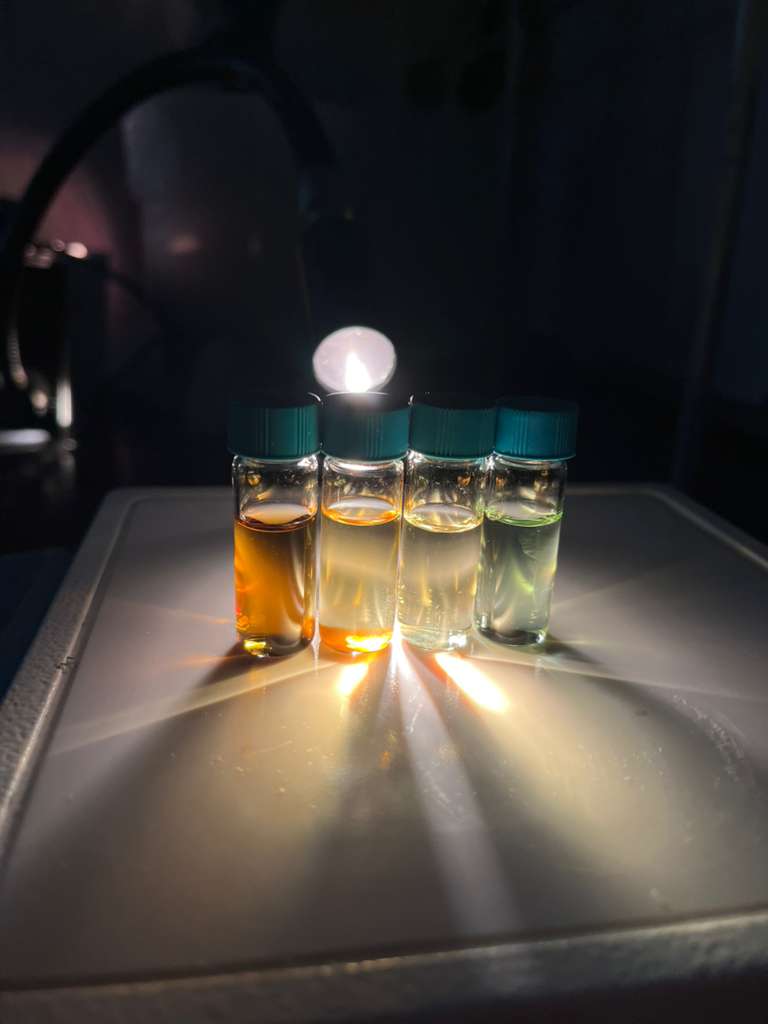
Our group investigates how light interacts with molecules to drive chemical transformations and influence molecular behavior. We study the mechanisms of light-induced processes with the goal of understanding and controlling photochemical reactivity. This work contributes to the development of new catalytic methods, functional materials, and sustainable chemical technologies.

Metallaphotoredox catalysis

In our research, the combination of organometallic chemistry and photochemistry is used to investigate how light can be used to control and enhance the reactivity of metal complexes. We seek to understand excited-state processes and develop new light-driven catalytic transformations for sustainable chemical synthesis.

What’s in for the students?

Students in our group are immersed in a broad spectrum of techniques that span multiple areas of chemistry. Through their training, they gain hands-on experience in organic and inorganic synthesis, catalysis, photochemistry, and a variety of modern spectroscopic methods, building a versatile skill set that prepares them for diverse research challenges.

research area: Energy

We are interested in sustainable catalytic strategies that harness light to convert abundant and low-value feedstocks into energy-relevant chemicals and fuels. For that we design catalysts that selectively activate exceptionally strong chemical bonds, under mild conditions using visible light. Through high-throughput experimentation, data-driven catalyst discovery, and advanced mechanistic characterization, our goal is to establish fundamental design principles for next-generation catalytic systems that enable more efficient chemical manufacturing, carbon utilization, and solar-driven energy conversion.

research area: Health Sciences

Our research develops catalytic methods for the sustainable synthesis of biologically active molecules inspired by natural products. By combining transition-metal catalysis and photochemistry we transform renewable biomass-derived compounds into structurally complex molecular scaffolds with potential therapeutic applications. We are particularly interested in designing efficient synthetic routes to natural product derivatives and hybrid molecules that incorporate pharmacologically privileged motifs, enabling the discovery of new compounds with improved biological activity. Through catalyst development and reaction innovation, our goal is to accelerate the synthesis of medicinally relevant molecules while promoting more sustainable approaches to pharmaceutical research and development.

research area: Environment and Sustainability

Our research develops sustainable catalytic methodologies that address environmental challenges by converting pollutants and renewable carbon resources into valuable chemicals. Current research focuses on greenhouse gases utilization, with the goal of transforming these gases into useful chemical building blocks. Through these efforts, we seek to advance circular carbon utilization and establish environmentally responsible catalytic technologies that contribute to a more sustainable chemical industry.

Share This