


We hosted Dr. Justin Pratt!
Thank you for visiting us, Justin! It was a blast! Short but very sweet!
Thank you for visiting us, Justin! It was a blast! Short but very sweet!

Thank you for visiting us, Nick! It was such a pleasure!
Congratulations, Audrey!
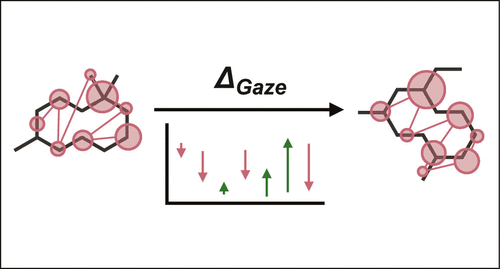
Langner, A., Sahba, M., Popova, M., Graulich, N.,* Adapting new methodological perspectives: An integrated approach for characterizing organic chemistry students’ changes in eye movements, J. Chem. Educ., 2025, Advance Article. Although the use of representations is crucial for problem-solving in chemistry, students often encounter challenges when using them. Hence, various interventions have been designed… Continue reading…

Meghan Kelly won one of 25 Munroe Research Awards from the UNCG’s College of Arts & Sciences Office of Research! Dorothy Levis Munroe graduated as a chemistry major from UNCG in 1944, along with her twin sister Katheryne Levis McCormick. Munroe went on to earn a master’s in chemistry, teach… Continue reading…
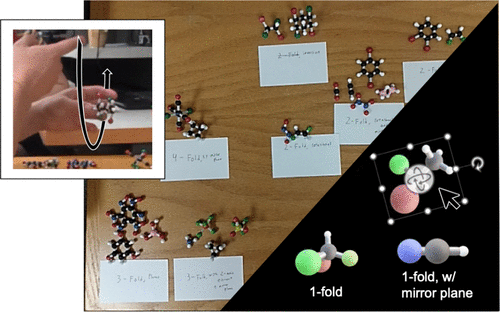
Morgenstern, R., Pazicni, S.,* Swineheart, S., Popova, M., 3D object-based card-sorting: A method for eliciting multimodal reasoning in chemistry, J. Chem. Educ., 2025, Advance Article. This contribution introduces 3D object-based card sorting as a novel method for eliciting and analyzing students’ multimodal reasoning in chemistry. Building on traditional card sort methodologies, this approach incorporates… Continue reading…
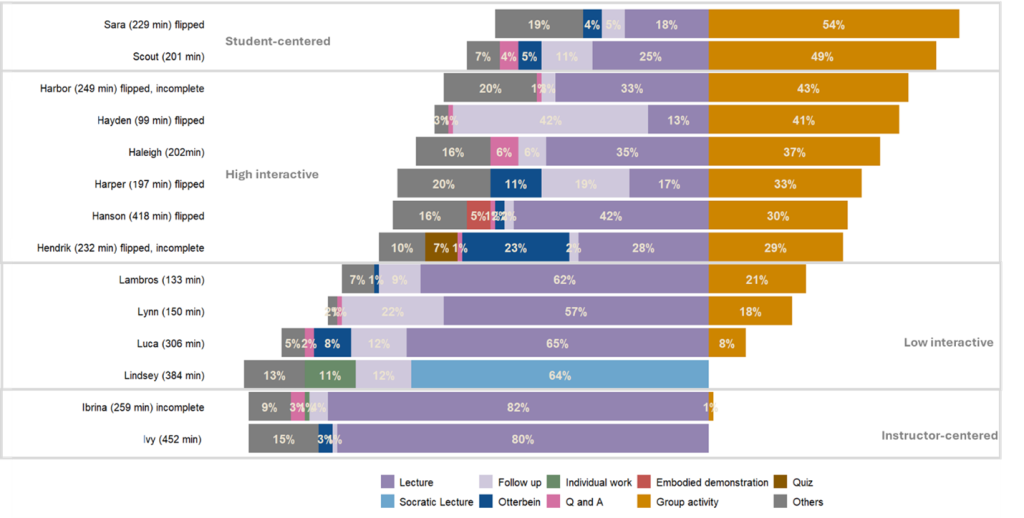
Shi, L., Hillborn, S., Pazicni, S., Popova, M.*, Different instructors—different symmetry: Variation in instructional approaches and content emphasis in inorganic chemistry, Chem. Educ. Res. Pract., 2025, Advance Article. Symmetry is a foundational concept in inorganic chemistry, essential for understanding molecular properties and interactions. Yet, little is known about how instructors… Continue reading…

Welcome aboard, Emile!

Meghan successfully defended her proposal and is now a PhD candidate! Congrats, Meghan!